
The mother of Cockroach Janta Party (CJP) founder Abhijeet Dipke on Wednesday claimed that her son had received a video threat coercing him to join the Bharatiya Janata Party or face severe consequences against his family.

The Supreme Court of India has dismissed the use of information from 'WhatsApp University' as evidence in a case concerning religious freedom and discrimination against women at religious sites, including the Sabarimala Temple.
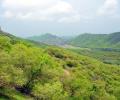
The Supreme Court has halted Haryana's jungle safari project in the Aravalli range until experts clarify the definition of 'Aravalli range,' citing concerns about environmental protection and potential damage to the eco-fragile area.
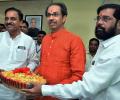
The Supreme Court is deliberating whether a split in the Shiv Sena could originate in the legislature party and then extend to the broader organisation and primary membership, as it hears pleas from the Uddhav Thackeray faction challenging the Election Commission's recognition of the Eknath Shinde-led faction.

The Supreme Court on Monday asked the Uttar Pradesh government to apprise it about the possibility of setting up an SIT to probe the alleged embezzlement of donations at the Ram temple in Ayodhya and cautioned the litigants not to politicise the issue.

The Supreme Court on Monday took note of setting up of a four-member SIT headed by IGP Kiran S to probe alleged embezzlement of donations at the Ram temple in Ayodhya and asked the Uttar Pradesh government to also include a forensic auditor in the probe team.
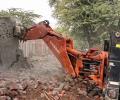
The Supreme Court on Thursday refused to consider a batch of contempt petitions alleging that demolitions were carried out in violation of its 2024 judgment and asked aggrieved parties to approach the high courts concerned.

The Supreme Court has questioned the amended constitution of the Shiv Sena, observing that it appeared to have made the party 'virtually a one-person structure' and raising concerns about democratic functioning within political parties.

The NCERT has apologised for 'inappropriate content' in a Class 8 textbook chapter discussing judicial corruption, following Supreme Court criticism. The textbook will be rewritten, and its circulation has been put on hold.

The Supreme Court of India has strongly criticised comedian Samay Raina and YouTubers Ranveer Allahbadia and Ashish Chanchlani for failing to comply with its previous order regarding disability awareness. The court expressed dismay over Raina's non-compliance and his alleged insensitive remarks about persons with disabilities, urging the Centre to consider a stringent law against such derogatory comments.

The Supreme Court, hearing pleas on the Shiv Sena split, observed that a political party retains control over its legislature wing and its valid decisions must prevail, but also advocated for granting 'elbow room' to elected representatives for political decisions if a majority 'genuinely disagree' with party directions.

A new digital political phenomenon, the 'E20 Janta Party', is gaining traction on Instagram, mobilising Gen Z against the government's mandatory 20% ethanol-blended petrol (E20) and demanding Union Minister Nitin Gadkari's resignation.

The NCERT has issued a public apology and withdrawn a social science textbook for Class 8 after the Supreme Court objected to a chapter on judicial corruption. The court imposed a ban on further publication of the book.
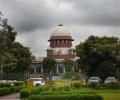
In a landmark decision, the Supreme Court of India has quashed the 2021 Office Memorandum allowing retrospective environmental clearances, reinforcing the importance of prior environmental approval for projects but held that the judgment will apply prospectively, thus saving projects that got retrospective ECs from demolition and other punitive measures.

The Supreme Court has agreed to urgently hear the bail plea of advocate Surendra Gadling, who has been incarcerated for seven-and-a-half years in the 2018 Elgar Parishad-Maoist links case, with the hearing scheduled for next week.

The Supreme Court has clarified that 'criminal antecedents' for NEET paper leak protesters refer only to grave and heinous offences, allowing state governments to withdraw FIRs against students not involved in such serious crimes. This comes after the Centre's commitment to not pursue cases against most protesting students.

Chief Justice of India Bhushan Ramkrishna Gavai retired, reflecting on his career, commitment to the Constitution, and social justice.
The Supreme Court has granted four weeks of protection from arrest to Bihar-based contractor Rishu Shree, who is accused of acting as a middleman in government tender manipulation. Shree is alleged to have charged commissions to facilitate contracts, with the Enforcement Directorate investigating a "larger conspiracy" involving multiple Bihar departments.

A plea has been filed in the Supreme Court seeking a probe into the allegations regarding fake advocates and activities associated with the Cockroach Janta Party (CJP), a satirical digital outfit that came up recently and took social media by storm.

The Supreme Court has issued interim directions regarding nationwide protests over the NEET paper leak, ordering the release of minor student protesters without criminal records and directing states to preserve all digital evidence. The court also called for a fair and independent investigation into allegations of police excesses against students, while also acknowledging concerns for injured police personnel.
The Supreme Court has directed all states and Union territories to provide comprehensive information on acid attack cases, including case status, victim details, and rehabilitation measures.

Cockroach Janta Party (CJP) founder Abhijeet Dipke is set to appear before a Ministry of Electronics and Information Technology (MeitY) committee regarding the withholding of the group's X account. This development comes amidst an ongoing CJP protest at Jantar Mantar demanding the resignation of Union Education Minister Dharmendra Pradhan over alleged exam irregularities and the NEET paper-leak controversy.
The Supreme Court expressed concern over threats to election officials in West Bengal and other states, urging the Election Commission to take action. The court also addressed the lack of cooperation from state governments in electoral roll revisions.
The Supreme Court has declined the Centre's request to postpone the hearing on petitions challenging the constitutional validity of the 2023 law, which excludes the CJI from the committee responsible for appointing election commissioners, stating the matter is of utmost importance.
The Supreme Court has declined an urgent hearing on petitions challenging the June 21 NEET-UG 2026 re-test, stating that all related matters will be heard by Justice P S Narasimha's bench in July. Students are seeking reconsideration of the re-test date due to mental trauma, inadequate preparation time, and concerns over examination integrity following the cancellation of the original May 3 exam.

The Supreme Court has directed an appellate tribunal to expeditiously decide an appeal filed by a 75-year-old advocate challenging the deletion of his name from the West Bengal voters' list following a Special Intensive Revision exercise. The court noted the petitioner appeared to be a bona fide resident and requested a decision within two months.
A group of lawyers and activists have petitioned the Chief Justice of India to retract recent Supreme Court remarks that cast doubt on the legitimacy of environmental pleas against developmental projects.
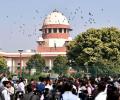
A woman lawyer was escorted out of the Chief Justice of India's courtroom after disrupting proceedings by persistently raising an unlisted case despite directions to stop by the bench.

Chief Justice of India considers shifting Supreme Court hearings to virtual mode due to severe air pollution in Delhi after experiencing its effects firsthand.

The Supreme Court declined to initiate contempt action against a lawyer who hurled a shoe at the Chief Justice of India, citing the CJI's own refusal to proceed against him. The court is considering guidelines to prevent such incidents.

The Supreme Court has directed that a separate open space be provided adjacent to the disputed Bhojshala site in Madhya Pradesh's Dhar for offering namaz on Fridays, pending the final resolution of the case. The court emphasised the sensitive nature of the matter and urged both Hindu and Muslim sides to exercise patience.

The Supreme Court has agreed to hear appeals challenging the Madhya Pradesh High Court's decision to designate the Bhojshala complex as a Goddess Saraswati temple, a ruling that also quashed Muslim prayer rights at the historic site.
The Supreme Court has scheduled a July hearing for the Rs 500 crore money decree case involving Ras Al Khaimah Investment Authority (RAKIA) and industrialist Nimmagadda Prasad, following the failure of a mediation process led by former Chief Justice of India U U Lalit.

The Supreme Court highlighted the critical need to protect forests across India, specifically mentioning states like Jharkhand for their natural ecosystems. The court declined to interfere with a Jharkhand High Court order concerning regulations for stone mining and crushers near forest boundaries, asserting the High Court's constitutional authority in the matter.

The Supreme Court on Tuesday stayed trial proceedings against former Karnataka chief minister BS Yediyurappa in a sexual harassment case filed under the Protection of Children from Sexual Offences Act.

Justice Surya Kant is set to become the 53rd Chief Justice of India, bringing extensive experience and a record of significant verdicts on key issues.

When dialogue fails, protest becomes inevitable.
In a democracy, protest is often the only language left once institutions stop listening, explains Ramesh Menon.

Cockroach Janata Party, which according to Dipke had 201,000 followers on X, came about following a controversy over Chief Justice of India Surya Kant using "parasites" and "cockroaches" while pulling up a lawyer for his plea seeking senior designation.
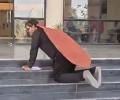
An activist in Mathura, India, protested the pollution of the Yamuna River by dressing as a cockroach and staging a demonstration at the municipal corporation office.

The Supreme Court of India has dismissed a Public Interest Litigation (PIL) seeking a nationwide policy for menstrual leave for women students and workers, citing concerns about potential negative impacts on female employment and the reinforcement of gender stereotypes.
